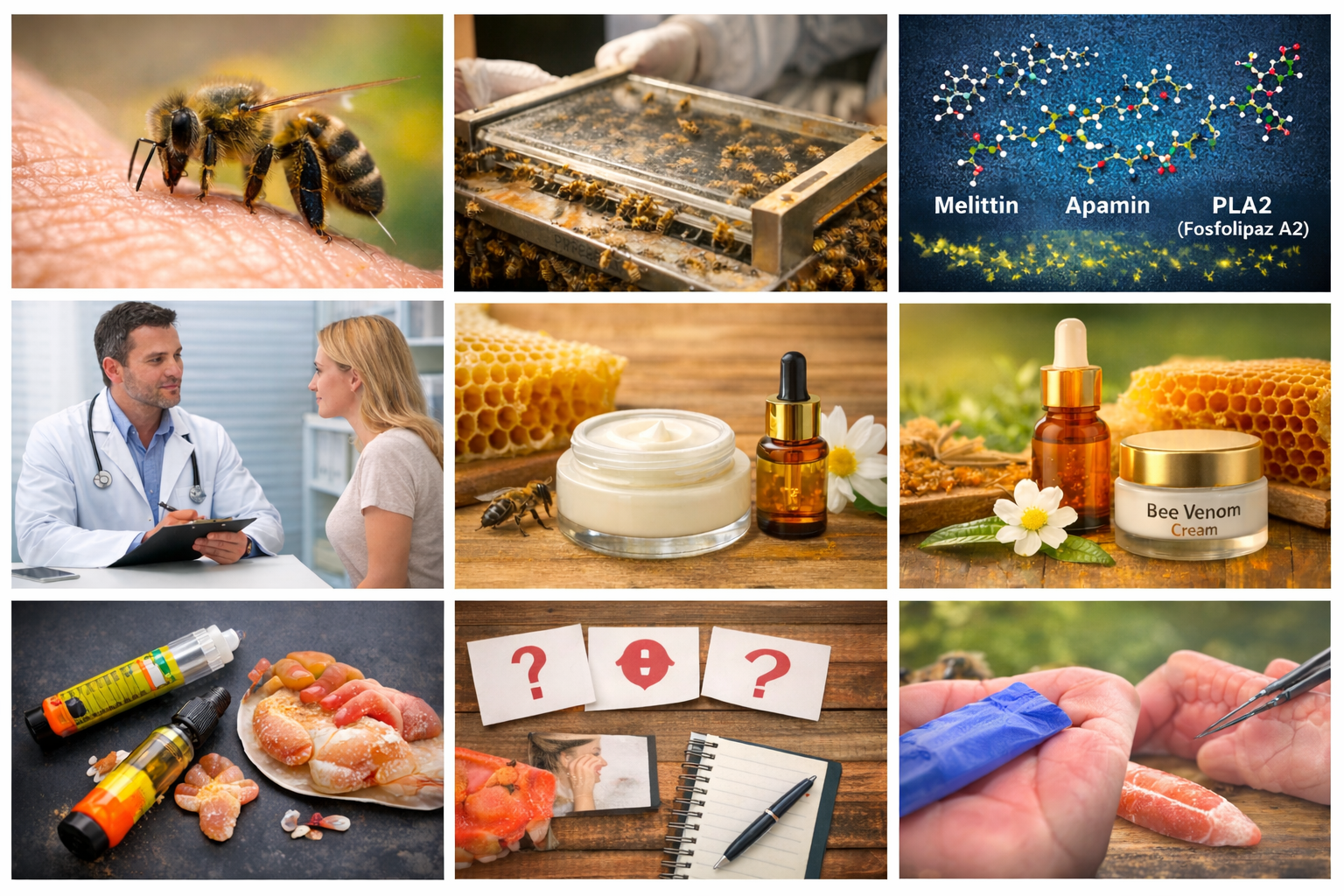
Apitherapy • Informational Article Bee venom is a mixture of biologically active compounds produced by honeybees for defense. Although it is studied and discussed within apitherapy, it requires special caution due to its high allergy risk. This content is for informational purposes only and is not medical advice. Bee venom is part of the honeybee’s natural defense system. When a bee perceives danger, it injects venom through its stinger. This venom is a complex mixture of peptides, enzymes, and biologically active substances. Bee venom can be collected using various methods for research and apitherapy purposes. Modern production aims to avoid harming bees and relies on controlled collection techniques. Standardization, hygiene, and traceability are essential in this process. The composition of bee venom may vary depending on species, season, environment, and collection method. However, commonly referenced components include melittin, apamin, phospholipase A2 (PLA2), and hyaluronidase. One of the best-known peptides in bee venom and frequently studied in research. A small peptide often mentioned in scientific discussions in different contexts. An important enzyme that may play a role in allergic response mechanisms. Hyaluronidase and various small molecules that may influence overall effects. Within apitherapy, bee venom appears in both traditional narratives and modern scientific discussions. Due to its high risk profile, any mention of application emphasizes professional evaluation and safety protocols. Bee venom components are studied in different areas of the scientific literature. This does not automatically translate into personal use recommendations. Bee stings have been mentioned in various historical contexts. Modern approaches prioritize safety, screening, and suitability evaluation. “Bee venom” cosmetic products are used by some individuals in skincare routines. Even in cosmetic use, allergic reactions are possible. A patch test is strongly recommended before first use. People with allergy/asthma history and very sensitive skin should consult a professional first. Avoid the eye area, start with small amounts, and stop use if redness or itching occurs. Test on a small area (e.g., inner wrist). If irritation occurs, do not use the product. Seek urgent medical help if any of these occur after exposure/sting: A bee sting is one way venom is delivered. “Bee venom” refers to the substance itself. There is an allergy risk. Patch testing is recommended before use. Safety. Bee venom should not be used without proper evaluation. Look for clear labeling, warnings, traceability, and reputable brands.What Is Bee Venom? An Apitherapy-Focused Comprehensive Guide
.png) Important warning: Bee venom may cause severe allergic reactions, including anaphylaxis, in some individuals. Applications involving bee venom (especially bee sting–based practices) should never be attempted without medical supervision.
Important warning: Bee venom may cause severe allergic reactions, including anaphylaxis, in some individuals. Applications involving bee venom (especially bee sting–based practices) should never be attempted without medical supervision.
What Is Bee Venom?

How Is Bee Venom Obtained?

Composition of Bee Venom

Melittin
Apamin
Phospholipase A2 (PLA2)
Other components
The Role of Bee Venom in Apitherapy

Research focus
Traditional narratives
Bee Venom in Cosmetics (Creams & Serums)

Who should be careful?
Use tip
Patch test
Safety: Who Should Avoid Bee Venom?
High-risk groups
Emergency symptoms

Frequently Asked Questions (FAQ)
Is bee venom the same as a bee sting?
Is bee venom cream safe?
What is the most important consideration?
What to look for when choosing products?

Share this post
Recent Posts
 Beeswax: Natural Cosmetics and Areas of Use.
13 January
Beeswax: Natural Cosmetics and Areas of Use.
13 January
 Royal Jelly
26 December
Royal Jelly
26 December
 Propolis - Natural Protection
25 December
Propolis - Natural Protection
25 December
 Pollen and Vitality
25 December
Pollen and Vitality
25 December
 Honey: Natural Energy and Vitality
25 December
Honey: Natural Energy and Vitality
25 December
 Benefits of real honey
25 December
Benefits of real honey
25 December
 What to Do If Your Honey Crystallizes!
25 December
What to Do If Your Honey Crystallizes!
25 December
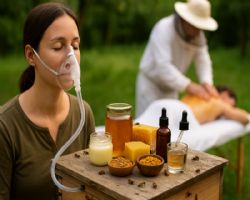 Wat is Apitherapy ?
25 December
Wat is Apitherapy ?
25 December