Propolis — Natural Protection: Apitherapy Perspective and Scientific Evidence
Quick summary: Propolis is a resinous substance collected by bees from plant resins and secretions, rich in flavonoids and phenolic acids. In apitherapy practice, propolis is commonly used in topical care, oral/dental products, and as part of supportive approaches for immune health. Modern research indicates antimicrobial, anti-inflammatory, and immunomodulatory potential; however, product standardization and the number of high-quality randomized controlled trials (RCTs) are still limited.
🔬 1) What Is Propolis? Chemical Profile and Active Compounds
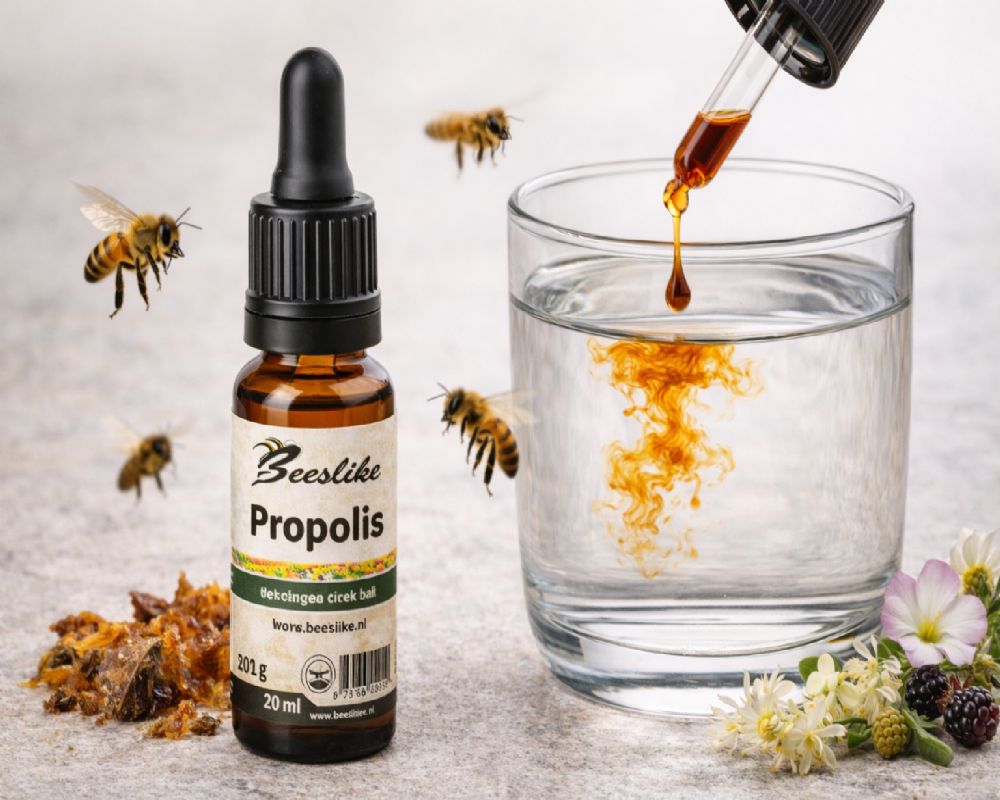
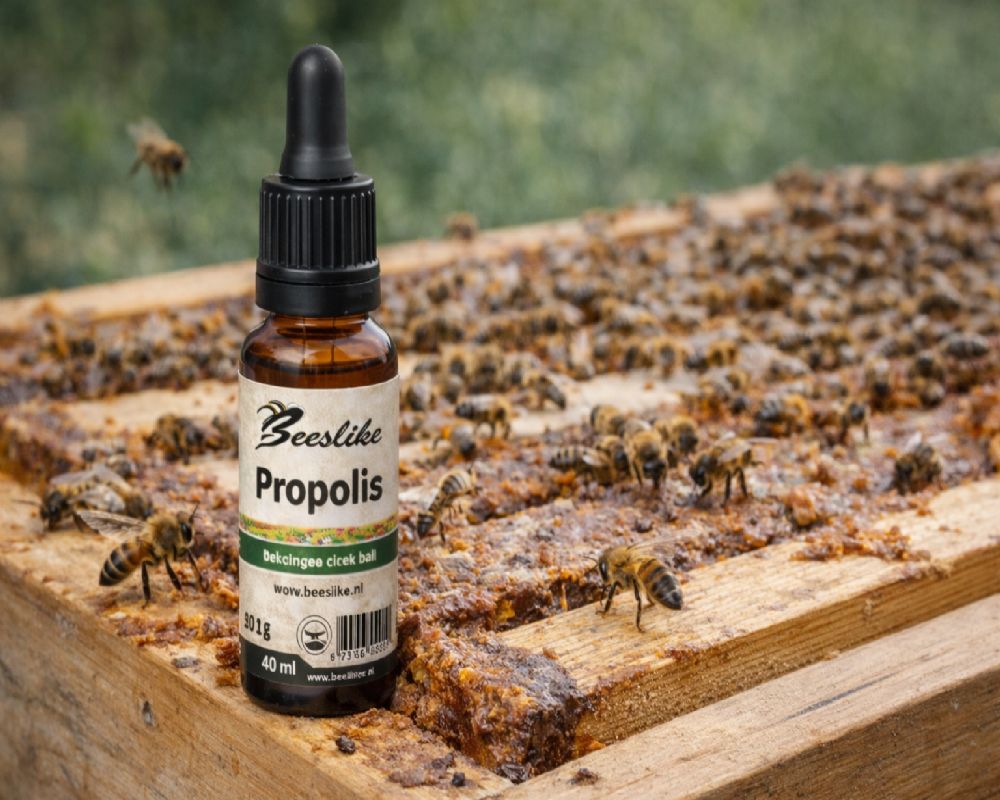
Propolis is a complex mixture of plant-derived resins, beeswax, bee enzymes, and minor organic compounds. Its composition varies by geography and botanical source, yet it typically contains high levels of flavonoids (e.g., galangin, chrysin, pinocembrin), phenolic acids (e.g., caffeic acid, p-coumaric acid), balsamic resins, and volatile components. These constituents underpin many of propolis’ biological activities.
Typical constituents
Flavonoids, phenolic acids, esters, balsamic resins, and terpene-related compounds.
Flavonoids, phenolic acids, esters, balsamic resins, and terpene-related compounds.
Physical characteristics
Color: light to dark brown; texture: sticky-to-solid at room temperature.
Color: light to dark brown; texture: sticky-to-solid at room temperature.
Source sensitivity
Plant sources (e.g., poplar, pine, juniper, Baccharis species) directly influence composition and effects.
Plant sources (e.g., poplar, pine, juniper, Baccharis species) directly influence composition and effects.
🧪 2) Scientific Activities of Propolis — Lab and Clinical Findings
Antimicrobial activity: In vitro studies and animal models suggest propolis can inhibit certain bacteria, fungi, and some viruses. Phenolic compounds may act by disrupting bacterial membranes, interfering with enzyme functions, and reducing biofilm formation. Overall, the literature supports a robust antimicrobial profile, mainly in laboratory settings.
Wound healing and topical use: Preclinical and some clinical studies report that propolis-based formulations may accelerate wound healing, reduce inflammation, and lower infection risk. Recent systematic reviews support this potential, though outcomes depend heavily on formulation, concentration, and standardization.
Immunomodulatory / antiviral potential: In vitro and some animal studies indicate propolis constituents can modulate cytokine responses and influence macrophage and neutrophil function. This suggests a regulatory role in immune response; however, human RCT evidence is limited and heterogeneous.
Key takeaway: Propolis looks strong in lab data; in real-world use, effects vary due to differences in product type, dose, and application.
📚 3) Human Studies: Where Evidence Is Stronger vs. Limited
- Oral and dental health: Some RCTs report that propolis-containing mouthwashes and toothpastes can reduce gingivitis and plaque indices. In some studies, effects were comparable to chlorhexidine; however, study designs and propolis preparations vary, so broad claims are not appropriate.
- Wound care: Systematic reviews suggest propolis-based products may support healing in certain wound types, yet heterogeneity remains.
- Systemic conditions (e.g., respiratory infections): While laboratory signals are promising, high-quality large-scale RCT evidence that propolis directly treats systemic diseases is still limited. Existing studies often have small samples or methodological differences.
🔬 4) How and Why Is It Used? (Apitherapy Practice)
In apitherapy centers, propolis is used in:
- Topical creams, ointments, or wound dressings (designed medical-grade formulations),
- Mouthwashes / dental care products (typically standardized propolis concentrates),
- Dietary supplements — with an important note: quality, extraction type (ethanolic vs. water-based), and purity can vary.
Practical guidance (apitherapy perspective): For topical use, prefer certified, medical-grade or clinically tested products. For oral care, alcohol-free, standardized products may be a safer option. For systemic use (extracts), check labels, dosing, and allergy information; people with chronic conditions or those using medication should consult a healthcare professional.
⚖️ 5) Strong Evidence vs. Overstated Expectations
Stronger areas: in vitro antimicrobial effects; supportive preclinical and some clinical evidence for wound healing; positive oral health outcomes under certain protocols.
More limited areas: there is not enough consistent, reproducible human evidence to claim propolis prevents infections or treats systemic chronic diseases on its own. In practice, it should be presented as a supportive option, not a standalone cure.
🚸 6) Safety & Warnings
- Allergy risk: Because propolis contains plant resins, it may trigger reactions in people allergic to bee products or pollen. A small patch test is often recommended first.
- Drug interactions: People using blood thinners or immunosuppressive drugs should consult a healthcare professional.
- Children, pregnancy, breastfeeding: Seek expert guidance, as supplement safety depends on age and individual circumstances.
📑 7) Selected Scientific References (to get started)
Systematic review — wound healing
Velho et al., Use of propolis for skin wound healing — systematic review/meta-analysis, 2023.
Velho et al., Use of propolis for skin wound healing — systematic review/meta-analysis, 2023.
Immunomodulation & antiviral
Magnavacca et al., review on antiviral & immunomodulatory activities of propolis — comprehensive overview (PMC open access).
Magnavacca et al., review on antiviral & immunomodulatory activities of propolis — comprehensive overview (PMC open access).
Oral health RCT
Anauate-Netto et al., randomized double-blind trial — propolis vs. chlorhexidine mouthrinse.
Anauate-Netto et al., randomized double-blind trial — propolis vs. chlorhexidine mouthrinse.
Composition & antibacterial mechanisms
Recent reviews discussing propolis chemistry and antimicrobial pathways.
Recent reviews discussing propolis chemistry and antimicrobial pathways.
🩺 8) Practical Recommendations for Apitherapy Centers
- When presenting propolis, share product-specific evidence: what type of propolis, what extract, what concentration — be explicit.
- For topical products, reference clinical data when available; avoid recommending homemade mixtures.
- Provide clear safety guidance: allergy testing, potential interactions, and child/pregnancy warnings should be visible.
Fast wrap-up (one sentence): Propolis has strong natural antimicrobial and anti-inflammatory potential; with correct product choice and use, it can be a helpful supportive option in apitherapy — but it is not a miracle cure, and safety/standardization must come first.
For our propolis products and apitherapy consultation: Explore the Propolis Collection »
Legal Disclaimer: This content is for informational purposes only and does not constitute medical diagnosis, treatment, or medication advice. Consult your doctor for health concerns.