👑 Royal Jelly — A Valuable Gift from the Hive
Summary: Royal jelly is a biologically active bee product produced by young worker bees. It contains proteins, amino acids, vitamins, and unique fatty acids. Because the queen is fed royal jelly from the larval stage onward, she can live much longer than worker bees. Royal jelly is popular in apitherapy and as a dietary supplement; however, it is not a medicine and does not replace medical diagnosis or treatment.
🔬 1) What Is Royal Jelly and How Is It Produced?
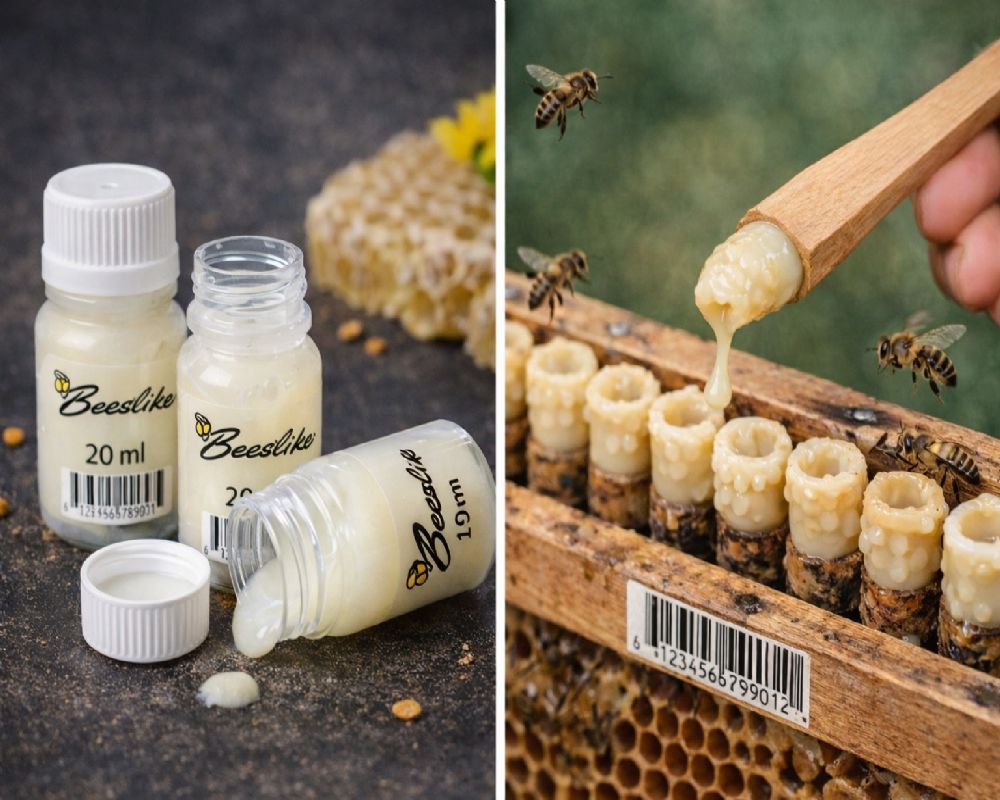
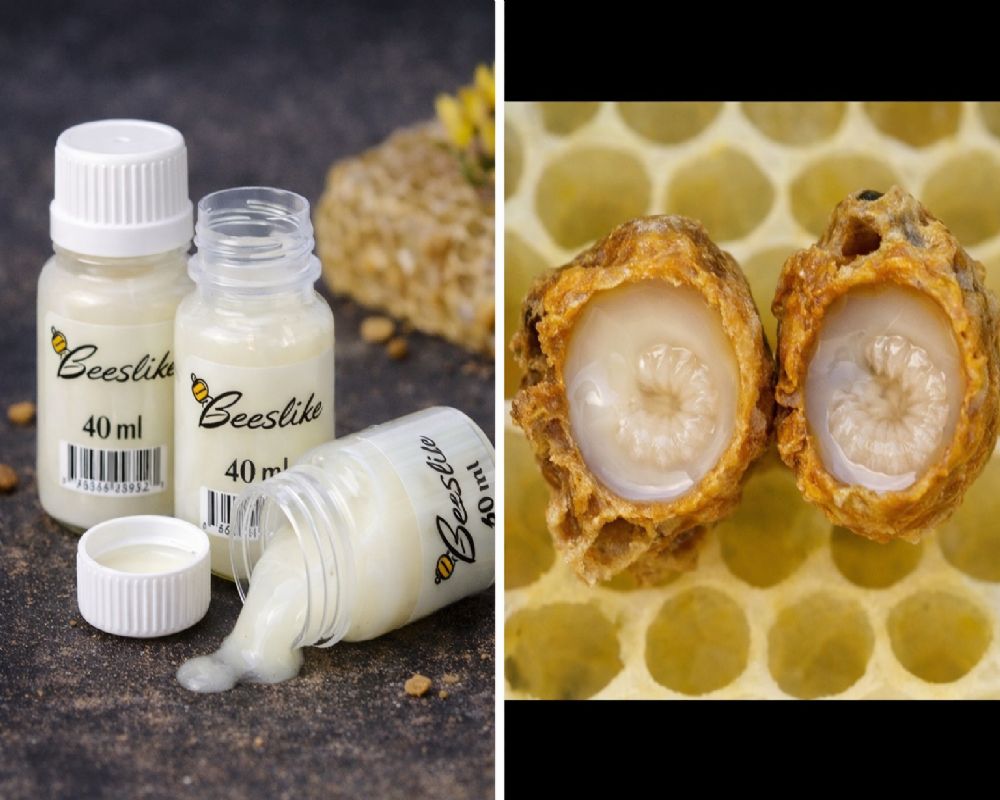
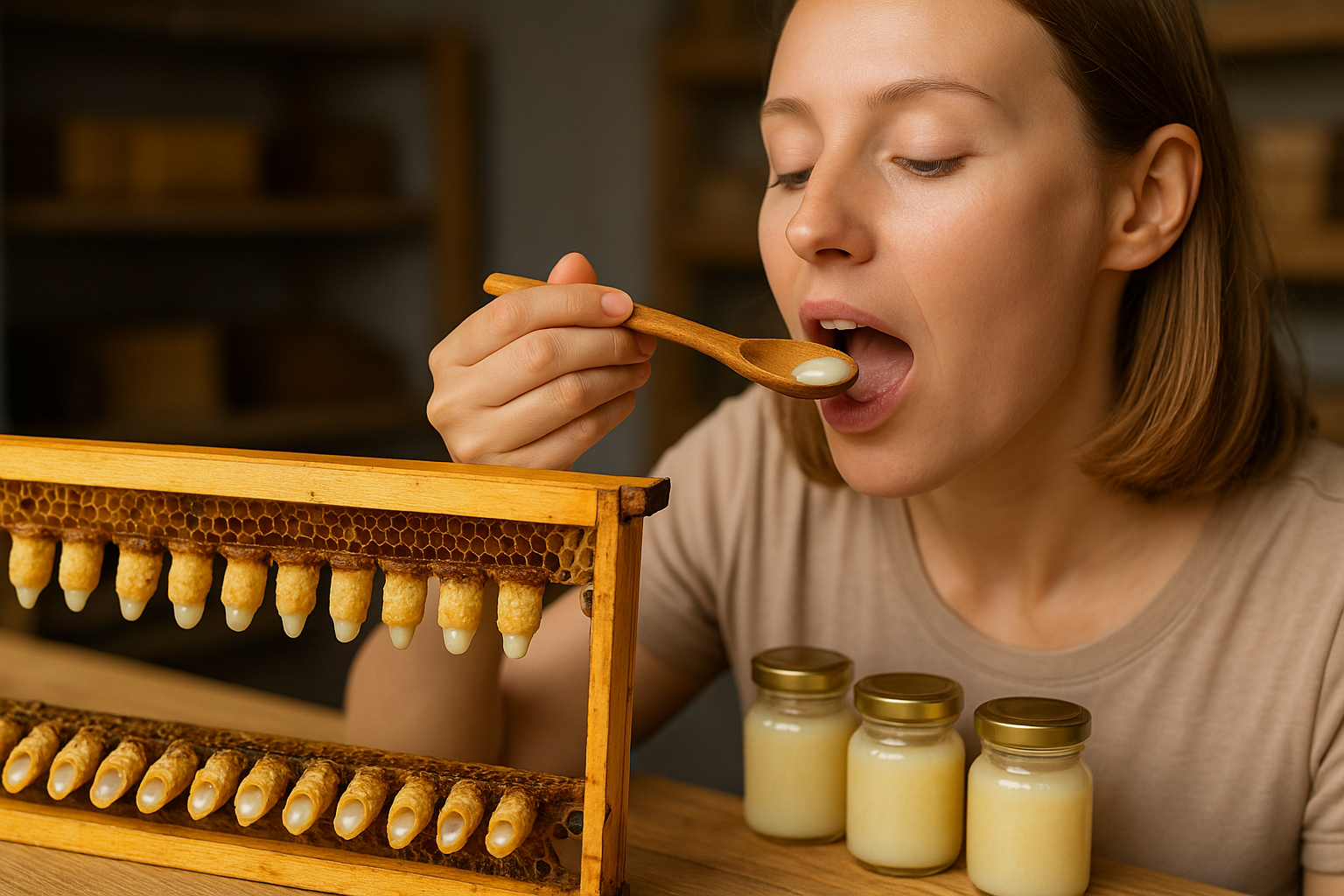
Royal jelly is generally secreted by the hypopharyngeal glands of worker bees aged 5–15 days. Young larvae are fed royal jelly during their early days, while the queen is fed a royal-jelly-rich diet throughout her life. In commercial production, colonies are encouraged to build queen cells; after a certain period, royal jelly is carefully harvested from these cells. The product is cooled quickly after harvesting, and maintaining the cold chain is essential to preserve freshness.
Physical Characteristics:
Thick in texture, pale cream in color, with a distinctive aroma. In many products, the pH is in an acidic range (approximately 3.5–4.5).
Thick in texture, pale cream in color, with a distinctive aroma. In many products, the pH is in an acidic range (approximately 3.5–4.5).
Storage:
Fresh royal jelly should be stored between +2°C and +5°C; for long-term storage, freezing may be preferred. Heat and light can reduce quality.
Fresh royal jelly should be stored between +2°C and +5°C; for long-term storage, freezing may be preferred. Heat and light can reduce quality.
The Most Reliable Way to Assess Quality:
The best indicators are an analysis report (especially the 10-HDA content), the production/harvest date, and proper storage conditions. Visual or “home tests” are not reliable on their own.
The best indicators are an analysis report (especially the 10-HDA content), the production/harvest date, and proper storage conditions. Visual or “home tests” are not reliable on their own.
🧬 2) What’s Inside Royal Jelly — Key Components
Royal jelly contains many bioactive compounds. The best-known include:
- Proteins: Especially the Major Royal Jelly Proteins (MRJP) group.
- Sugars: Natural carbohydrates such as fructose and glucose.
- Lipids: Unique fatty acids, including 10-HDA (10-hydroxy-2-decenoic acid), often considered characteristic of royal jelly.
- Vitamins: B-group vitamins (especially B5) and various micro-components.
- Minerals and amino acids: Minerals such as potassium, calcium, magnesium; amino acids such as proline, lysine, etc.
💪 3) Potential Benefits of Royal Jelly (A Balanced Scientific View)
Research on royal jelly includes laboratory/animal studies and a limited number of human studies. Therefore, effects may vary from person to person, and results should not be considered “certain.” Still, royal jelly is valued for its bioactive profile, and research often highlights the following areas:
🛡️ Immune and balancing support
Some studies suggest that compounds in royal jelly may have supportive effects on immune responses and pathways related to inflammation. This does not mean “disease treatment” — it is a general support perspective.
Some studies suggest that compounds in royal jelly may have supportive effects on immune responses and pathways related to inflammation. This does not mean “disease treatment” — it is a general support perspective.
✨ Antioxidant contribution
Components such as 10-HDA and certain peptides are associated with antioxidant mechanisms. Antioxidant support becomes more meaningful when combined with lifestyle factors (nutrition, sleep, stress).
Components such as 10-HDA and certain peptides are associated with antioxidant mechanisms. Antioxidant support becomes more meaningful when combined with lifestyle factors (nutrition, sleep, stress).
🌿 Energy, recovery, and daily vitality
Its richness in proteins, amino acids, and B vitamins may support “daily energy” and recovery in some individuals. The impact depends on dose, product quality, and personal routines.
Its richness in proteins, amino acids, and B vitamins may support “daily energy” and recovery in some individuals. The impact depends on dose, product quality, and personal routines.
🧴 Skin barrier and anti-aging care
Royal jelly is studied in nutrition and cosmetics under topics such as “skin barrier support” and “moisture/comfort.” It should be considered alongside consistent skincare (sun protection, moisturizing).
Royal jelly is studied in nutrition and cosmetics under topics such as “skin barrier support” and “moisture/comfort.” It should be considered alongside consistent skincare (sun protection, moisturizing).
Realistic expectations: Royal jelly is not a “miracle,” but with proper storage, good quality, and regular use, it can be a valuable bee product that may support many people’s general well-being goals.
⚗️ 4) How to Use Royal Jelly
- Fresh form: Often used in the morning on an empty stomach, held briefly under the tongue.
- Mixed with honey: Mixing with honey can soften the taste and make it easier to use (follow the product label).
- Freeze-dried/capsules: May have a longer shelf life; dosage should follow the label instructions.
- Dosage: There is no single “universal dose”; it depends on the product form and label. If you have a chronic condition or take medication, consult your doctor.
📜 5) A Historical & Cultural Note (More Accurate Wording)
- Bee products in history: Products like honey, propolis, and beeswax have been used in many cultures for traditional purposes.
- Specifically for royal jelly: The scientific definition of royal jelly as the “food of queen larvae” and its widespread use as a product became clearer mainly in the modern era.
- Conclusion: In modern times, the benefits and importance of royal jelly have been better understood, and hundreds of scientific studies and ongoing research continue to explore its properties.
🔬 6) Research & References
NCBI / PMC
Review articles on royal jelly components and potential biological effects.
Review articles on royal jelly components and potential biological effects.
PubMed
Biochemical and clinical research records on 10-HDA and royal jelly components.
Biochemical and clinical research records on 10-HDA and royal jelly components.
ScienceDirect
Academic publications on royal jelly peptides and bioactive compounds.
Academic publications on royal jelly peptides and bioactive compounds.
- Biochemical analysis on royal jelly and 10-HDA (PubMed)
- Royal Jelly: immunomodulatory and metabolic effects (NCBI/PMC)
- Bioactive peptides from Royal Jelly (ScienceDirect)
⚠️ 7) Important Notes
- Allergy risk: People allergic to bee products should not use it. Those with asthma/allergic tendencies should be especially cautious.
- Pregnancy / breastfeeding / chronic conditions: Consult your doctor in these cases and if you take regular medication.
- Children: Consult a healthcare professional for use in young children.
- Storage: Fresh royal jelly must be kept cold; it should not be left at room temperature for extended periods.
Ready to explore the bioactive compounds inside royal jelly?
Discover the BeesLike Royal Jelly Collection »
Discover the BeesLike Royal Jelly Collection »
Legal Notice: This content is for informational purposes only. Royal jelly is not a medicine; it may be used as nutritional support. Please consult your doctor for health-related decisions.